
White County Arrest Records and Charges
White County arrest records are law-enforcement or jail records tied to an arrest, booking, custody status, bond, arresting agency, and sometimes a booking charge. They do not prove conviction. The formal court charge record begins when the prosecutor files a complaint, information, or other charging document with the court. From that point, MyCase and Clerk records can show the charge list, court dates, amendments, dismissals, pleas, disposition, and sentencing.
The White County Sheriff's Office and jail are at 915 Hanawalt Street in Monticello, with the administrative line at (574) 583-2251. The sheriff's official inmate-search page may say to check back later, so the jail phone line is the reliable fallback for custody questions. The full court case and outcome live in the White County criminal court records file, while the jail roster and booking path belong on the inmate records channel.
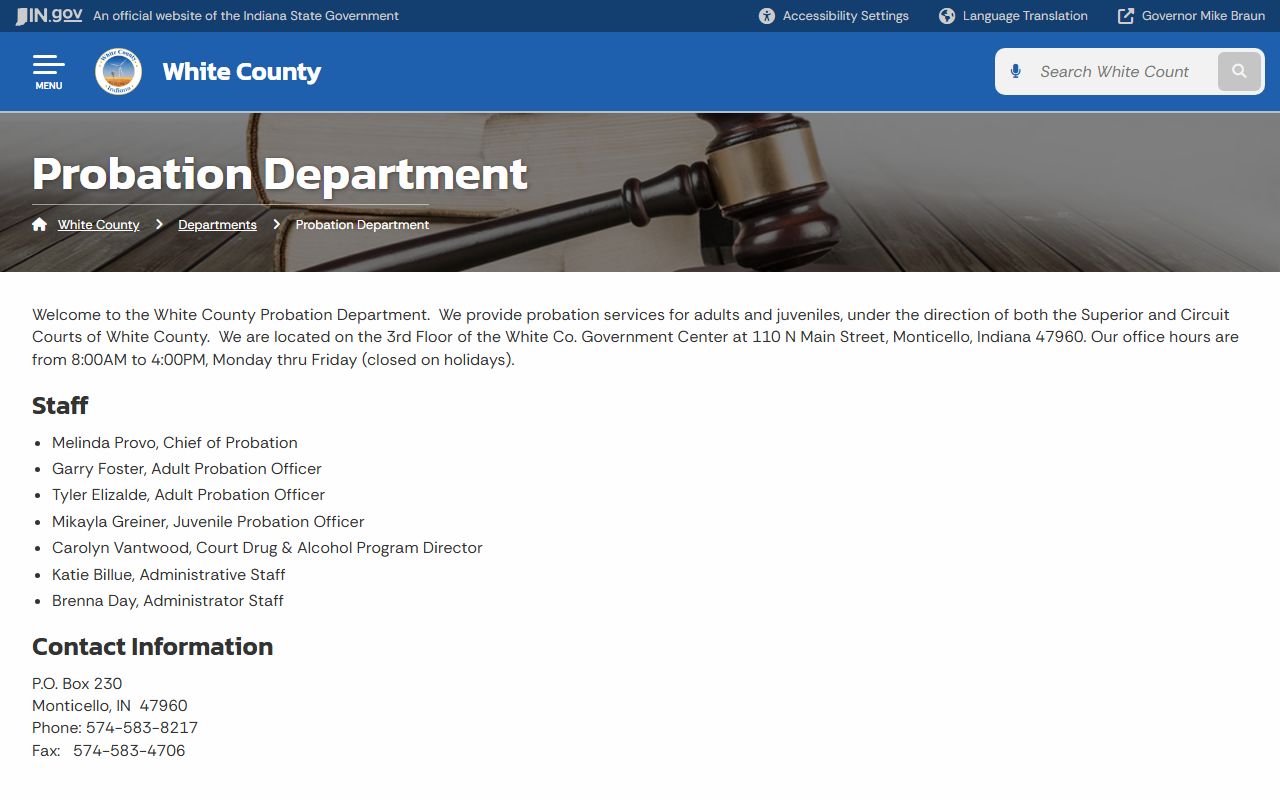
The White County Probation Department page at Indiana county services shows how charge outcomes can later connect to court supervision.
Find White County Arrest Records and Charges
For filed court charges, start with Indiana MyCase. Search by defendant name, case number, citation number, or cross-reference number. Criminal, misdemeanor, felony, infraction, ordinance, expungement, and post-conviction cases are allocated to White Superior Court under the local rules. For booking or custody records, use the White County Sheriff site, the sheriff app, or the sheriff and jail phone line.
- Check MyCase for a filed case using the defendant name or cause number.
- Open the case and review each charge or count listed in the court record.
- Read the docket after the charge list to see whether a charge was amended, reduced, dismissed, or resolved.
- Use the sheriff or jail channel for current custody, bond, booking, and release information.
- Ask the Clerk of the Circuit Court for certified copies or records not available online.
Indiana's statewide jail portal can be useful for comparison, but White County was not listed in the captured INjail county API during research. The Indiana Department of Correction channel applies after transfer to state custody.
Arrest Records vs Charge Records
The arrest side and the court-charge side answer different questions. A person can be arrested and released without a filed court case. A filed charge can also be changed after the first court entry. This is why White County arrest records should be checked against MyCase before drawing conclusions about prosecution or conviction.
| Point | Arrest Record | Court Charge Record |
|---|---|---|
| Created By | Sheriff, jail, or arresting agency. | Prosecutor and court filing process. |
| Main Purpose | Shows custody, booking, arrest, bond, and release information. | Shows formal charges filed in court and case progress. |
| Where to Check | White County Sheriff, jail phone line, sheriff app, and custody systems. | Indiana MyCase and the Clerk of the Circuit Court. |
| Outcome | Does not prove a case was filed or won. | Can show disposition, dismissal, plea, conviction, or sentence. |
Indiana court and problem-solving court authority appears in Indiana Code Title 33.
Charging Documents After Arrest
After an arrest, the prosecutor decides what to file. Research identified Mark Delgado as White County Prosecutor, with the office reachable at P.O. Box 946, Monticello, IN 47960, phone (574) 583-5120. The charging document is the bridge from arrest allegation to court case. In Indiana practice, the most relevant court-charge terms are complaint, information, and indictment, although the specific form depends on the case type and law.
| Document | Who Uses It | What It Does |
|---|---|---|
| Complaint | Often tied to officer or prosecutor allegations. | Starts or supports a criminal accusation in court. |
| Information | Filed by the prosecutor. | States the formal charge or count the State is prosecuting. |
| Indictment | Grand jury process when used. | Accuses a person of an offense through grand jury action. |
One arrest can result in several counts. Each count should be read as its own accusation, with its own status and possible outcome.
White County problem-solving court authority is also reflected through Indiana courts statutes.
White County Charge Status
Charge status changes are common. A charge can begin as one level, then be amended by the prosecutor, reduced through a plea, dismissed by the court, or resolved by conviction. MyCase docket events should be read after the charge list because the first charge entry may not be the last word.
| Status | What It Means | What to Check Next |
|---|---|---|
| Pending | The charge is filed and still active. | Hearing dates, motions, bond, and pretrial entries. |
| Amended | The prosecutor or court record has changed the charge wording, level, or count. | Later charge entry and docket order. |
| Reduced | The charge level or offense has been lowered, often during plea negotiations. | Plea, disposition, and sentence entries. |
| Dismissed | The charge was terminated without conviction on that count. | Whether other counts remain open or resulted in conviction. |
| Convicted | The defendant was found or pleaded guilty on that count. | Sentencing, probation, fines, costs, and restitution. |
| Expunged or Restricted | Public access is limited by statute, court rule, or order. | Rule 9 access process or the expungement order. |
Charges vs Convictions
A charge is not a conviction. White County arrest records may list an allegation at booking, and a court record may list charges at filing, but conviction requires a plea, verdict, or other court outcome. Each charge should be traced from filing through disposition and sentence.
| Point | Charge | Conviction |
|---|---|---|
| Legal Meaning | An accusation that the State has filed. | A final guilty result on a count or case. |
| Record Location | Booking record, charging document, and MyCase charge list. | Disposition and sentencing entries in the court case. |
| Can Change | Yes, it can be amended, reduced, dropped, or dismissed. | It can be appealed, corrected, or later affected by expungement, but it is the outcome unless changed. |
| How to Verify | Review the docket after the charge list. | Request a certified court record when legal proof is needed. |
Sealed vs Expunged Charges
Indiana court-access rules and expungement law can limit public access to arrest and charge records. Juvenile charges, sealed cases, excluded data, and some personal identifiers are not open like ordinary adult criminal cases. Expungement cases are allocated to White Superior Court under the local rules, and Indiana expungement law is found in IC 35-38-9.
| Point | Sealed or Excluded | Expunged |
|---|---|---|
| Effect | Public access is blocked or limited. | The record is sealed, marked expunged, or restricted as ordered under Indiana law. |
| Applies To | Juvenile, mental-health, adoption, protected data, sealed, and other excluded records. | Eligible arrests, charges, dismissals, misdemeanors, felonies, or convictions by statutory category. |
| White County Filing | Access questions go to the court controlling the record. | Expungement petitions are filed through White Superior Court and the Clerk. |
| Limit | Authorized users may still access some sealed material. | Expungement does not always erase every government record. |
A request to see excluded court material follows Indiana Rule 9. The record remains confidential unless the court grants access.
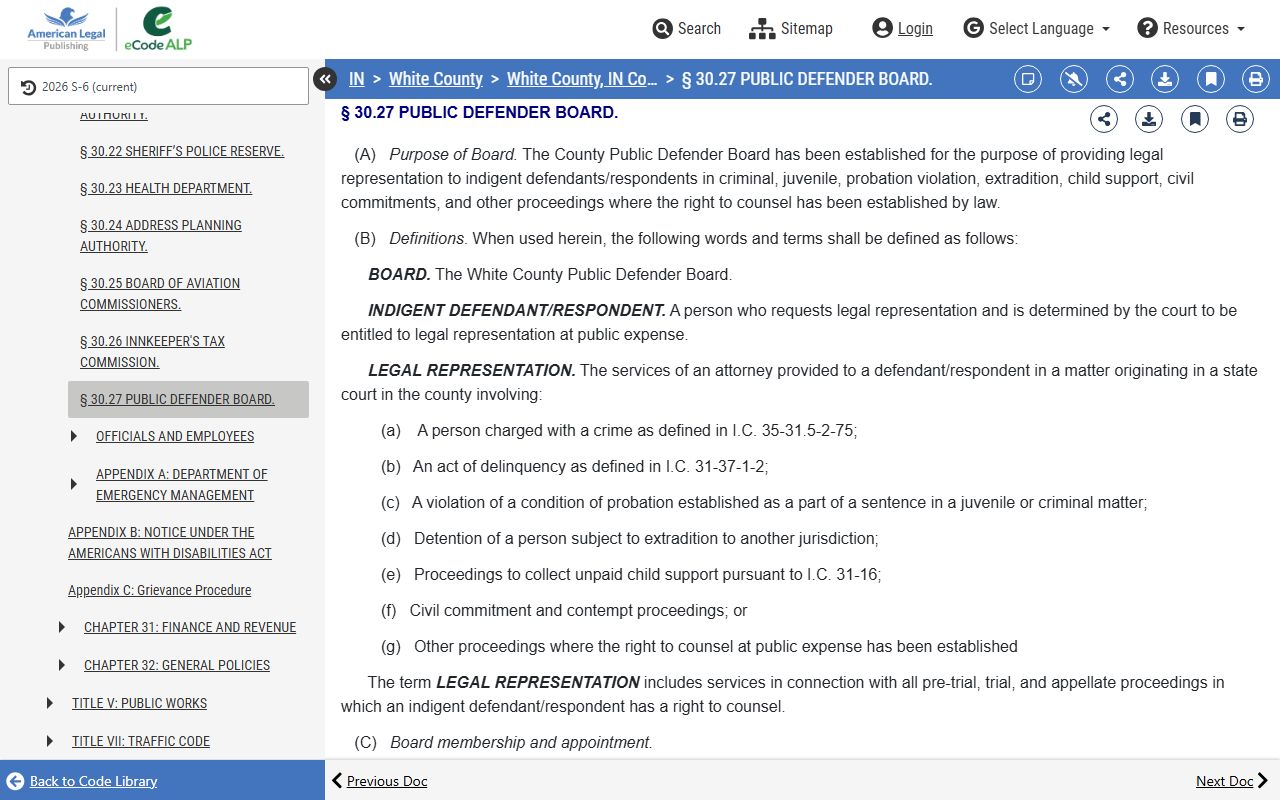
The White County public defender board ordinance appears in the county code at American Legal Publishing's White County Code.
State and Custody Channels
State and custody channels answer different questions than a White County court-charge search. The Indiana Department of Correction search applies when a person has moved into state custody after sentencing or transfer. Federal custody uses federal channels. Sheriff app and jail information can support booking and custody checks, but they do not replace MyCase for formal court-charge status.
The sheriff's OCV app is documented in the research through iOS, Google Play, and share links. The official web shell exposes features such as inmate search, bonding information, commissary, visitation, jail rules, tax warrants, submit a tip, staff directory, most wanted or warrants, and push history. No app-only charge field was verified, so app references should be used as a custody and sheriff-information channel only.
The Indiana Department of Correction is the state custody channel after a person leaves county jail for DOC custody.
When a person is still in local custody, sheriff and jail sources are more relevant than a state prison lookup.
The sheriff app share page at OCV's White County app link is a separate sheriff channel.
Access Limits for White County Charges
Indiana Access to Court Records Rule 4 starts with public access to court records, but Rule 5 excludes certain cases, documents, and data. Juvenile matters are restricted. Mental-health and adoption records are restricted. Birth dates, Social Security numbers, financial account data, confidential addresses, and minor identities are withheld or redacted. An arrest without conviction may also be affected by expungement if statutory requirements are met.
Important: Do not treat a booking charge or newly filed charge as proof of conviction without checking disposition.
Certified proof of a charge, dismissal, conviction, sentence, or expungement order must come from the court record office. The Clerk of the Circuit Court is at 110 N Main St, 2nd Floor, Monticello, and can be reached at (574) 583-7032 for court-file requests.