
What White County Probate Covers
White County does not have a separate stand-alone probate court. Probate-style filings are White Circuit Court matters, and the White County Clerk maintains the record function for the local court file. The 2026 local case allocation rule assigns estate, unsupervised estate, miscellaneous estate, guardianship, and trust cases to White Circuit Court. That same local structure keeps probate records tied to the White County Government Center in Monticello rather than to a differently named probate office.
A probate record may involve a deceased person's will, estate administration, small-estate transfer, guardian appointment, trust matter, inventory, bond issue, accounting, closing order, or certified copy request. Some probate records are public court records, but access can narrow when the file contains confidential financial details, protected health facts, minor information, or guardianship material. The useful distinction is simple: MyCase can help locate a public case entry, while official documents come from the clerk or court maintaining the file.
The Indiana General Assembly publishes Indiana probate law in Title 29, including estate and small-estate provisions. White County local rules add county-level filing rules on notice, bond, accountings, and fees. Those local rules matter because they describe what must be prepared before a probate issue is brought to court.
White County Probate Terms
Probate words often appear in captions, forms, and docket entries. A person searching White County probate records should match the term to the record type before requesting copies, since an estate file and a guardianship file may follow different access and notice rules.
- Testator
- The person who made a will before death.
- Executor
- The person named in a will or appointed by the court to carry out estate duties.
- Intestate
- A death with no valid will controlling the estate property.
- Guardianship
- A court case appointing authority over a minor or an incapacitated adult.
- Conservatorship
- A protective property-management role used in some states; in White County research, the local probate allocation specifically identified guardianship, estate, and trust matters.
According to the Indiana probate source page, small-estate and estate rules depend on statutory thresholds and timing. Local forms add the White County details a filer must complete, including decedent information, value thresholds, entitlement basis, and notary acknowledgment.
Search White County Probate Records
Current public probate case information may appear in Indiana MyCase, reached from the Indiana Judicial Branch White County landing page. MyCase is useful for case numbers, court assignment, party names where public, filing dates, and docket events. It is not the official court record, and Indiana public-record guidance says certified wills, estate documents, divorce decrees, and similar court documents must be requested from the clerk's office in the county where the matter was filed or heard.
- Start with the Indiana Judicial Branch White County page and use the court case search link for current public case data.
- Search by party name or case number. For estates, try the decedent's name and known family or fiduciary names.
- If the file is older, ask the Clerk about the White County records 2017 and prior portal linked from the clerk page.
- For a certified will, estate filing, guardianship order, or document copy, contact the White County Clerk instead of relying on the online display.
- For a small-estate transfer, review the official White County Affidavit for Transfer of Assets without Administration form before filing.
The Indiana probate and small-estate statute source helps explain the thresholds and timing behind the small-estate affidavit. White County probate records still need local filing review because the clerk and court maintain the official file.
White County Probate Court Contacts
Probate matters in White County route through White Circuit Court, with records and counter service handled by the White County Clerk. Both offices use the courthouse mailing base in Monticello. The Clerk's Office is the first contact for certified copies and older probate records, while White Circuit Court is the court assigned to estate, guardianship, trust, adoption, juvenile, family, protective order, and related case categories under the local rules.
White Circuit Court
P.O. Box 350
Monticello, IN 47960
(574) 583-5032
Probate-style matters assigned by local rule
White County Clerk
110 N Main St, 2nd Floor
P.O. Box 350, Monticello, IN 47960
(574) 583-7032
Monday-Friday 8:00 AM-4:00 PM, closed holidays
Official county pages do not publish a separate probate counter, a probate-only phone number, or a separate probate clerk. Use the clerk contact for record copies and filing questions, and use the Circuit Court contact for court scheduling and judge-controlled matters.
White County Probate Fees
The White County Clerk page reviewed did not publish a full probate filing fee schedule for estate or guardianship openings. The local rules do publish important fee controls for probate administration, and statewide marriage-copy guidance gives a separate certified-copy figure for marriage records. For probate records, the safest path is to call the clerk before mailing payment or requesting certified estate documents.
| Item | Amount / Rule |
|---|---|
| Probate filing fees | Not published on the White County Clerk page reviewed |
| Certified estate or will copies | Confirm cost with the Clerk before ordering |
| Supervised estate or guardianship attorney and fiduciary fees | No payment without prior written court order under LR91-PR00-19 |
| Unsupervised estate attorney and fiduciary fees | Court generally will not determine and authorize fees absent exceptional circumstances |
| Transcript per-page maximum | $6.50 ordinary; expedited $8.50 with 24-hour notice or $7.50 with 3 days' notice under LR91-AR15-08 |
Fee rules can affect when a fiduciary may be paid and what a transcript can cost, but they do not replace current filing-cost confirmation from the Clerk. Note: Do not send a filing fee based on an old schedule without confirming the amount with the Clerk.
What White County Probate Records Show
White County probate records may show the estate caption, decedent name, date of death, county of residence, party names, fiduciary names, attorney names, inventories, bond information, notices, proof of publication or mail, orders, accountings, and closing entries. Guardianship files may identify the proposed protected person, guardian, bond facts, court orders, and accounting duties. Trust matters can show petitions, orders, and trustee-related filings when the case is public.
The local probate rules give several White County-specific details. Attorneys must prepare required notice by publication or U.S. Mail and make sure proof of notice exists before bringing a matter to court. Estate and guardianship petitions must set forth probable assets and values, including personal property plus estimated annual rents and profits from property, so the court can determine bond. If an estate cannot close within one year, an intermediate account must be filed within 30 days after the one-year mark and every succeeding six months.
The official White County small-estate affidavit captures the decedent's name, date of death, county of residence, statement that no personal representative petition is pending, 45-day waiting period, estate-value checkbox, entitlement reason, recipient information, property description, holder name and address, affiant contact details, and notary block. Those fields make the form useful even before a user contacts the clerk.
Probate searches should stay with court and clerk sources unless a record issue separately involves custody, warrants, or another court case type. Third-party records-search pages are not authority for White County estate records.
Restricted White County Probate Records
Probate files are not all equally open. A public estate docket may exist while certain documents, identifiers, financial account data, medical facts, minor information, or sealed filings remain withheld. Guardianship matters deserve special care because they may involve minors or incapacitated adults. Indiana court-access rules can exclude specific data or documents from public access even when the case itself appears in a public search.
The Indiana public-records request guidance directs users to the clerk or court that maintains the record for official copies. That is the right channel for White County probate records that need certification or court seal. If a record is excluded from public access, a person may need party status, attorney access, statutory authority, or a court order.
The Indiana probate law citation source is useful for statutory context, but it does not make a confidential document public. Court access depends on the file, the requester, and the rule or order controlling the record.
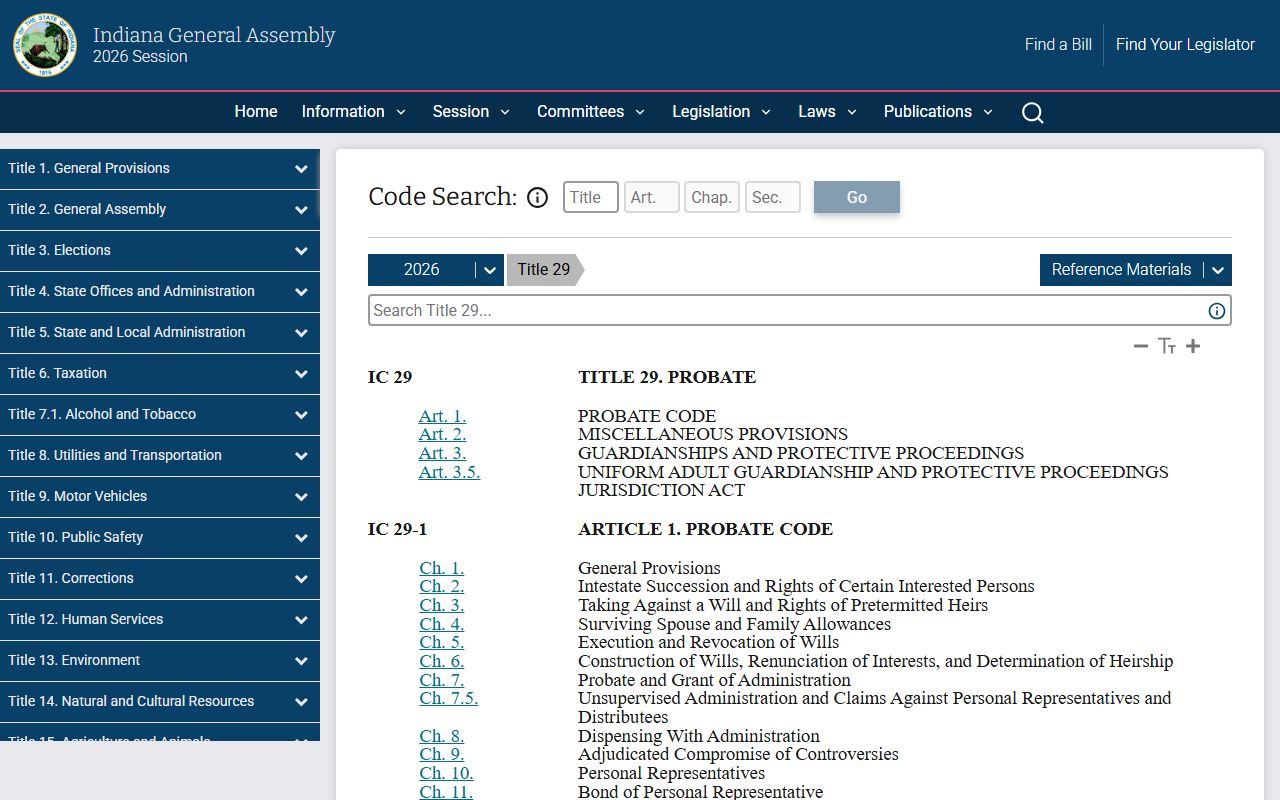
Use statute pages to understand the probate process, then verify document access with the White County Clerk before relying on a copy.
The Indiana small-estate and probate law page also supports the small-estate affidavit thresholds listed in the White County form.
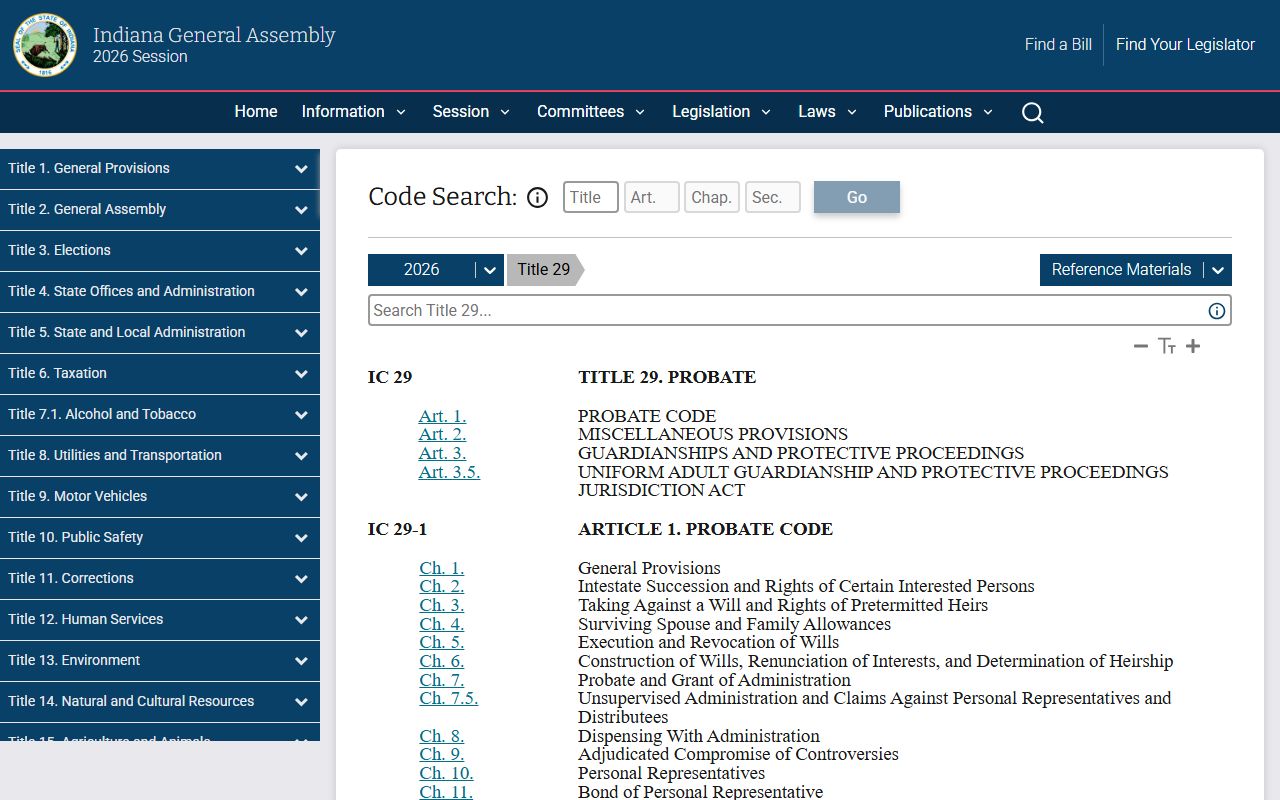
That state-level source should be read with the White County local rules because the local rules control filing practice, notice proof, bond information, and accountings in White Circuit Court.